
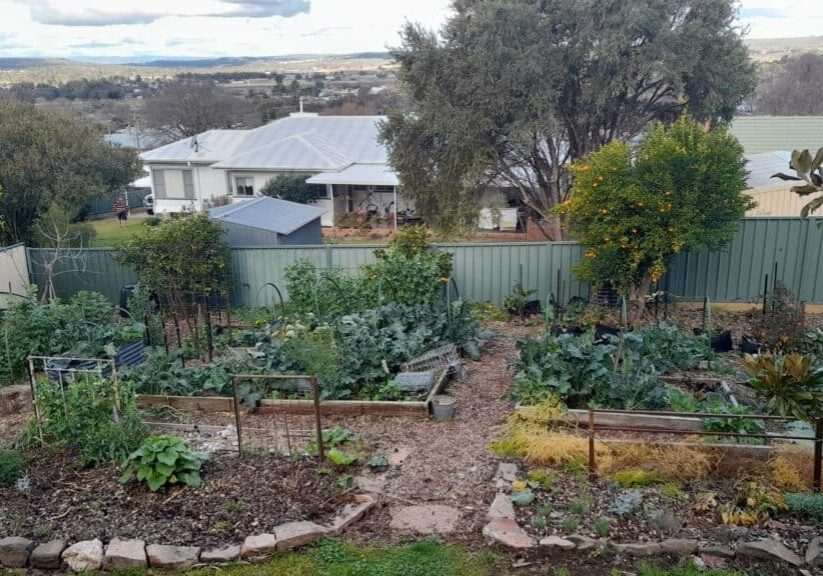
With today’s ever-increasing food costs and occasional food shortages, growing your food is becoming more appealing.
There could be some argument about how much growing your food actually saves, but that depends on how you garden. If you garden on a tight budget like me, the savings are significant.
Personally, the less I shop at the supermarket the happier I am. I prefer to buy fresh produce from local growers. I also know the more we go to the supermarket, the more likely we are to purchase items we don’t need.
At the moment we shop weekly for eggs, milk and sometimes cheese. Occasionally we purchase another item or two and if we find a pantry staple like coconut oil, or olive oil on special we buy two or three items at once to keep our staple foods stocked.
Most of our other staples, apart from fresh food, are bought in bulk. I prefer to always have a fully stocked pantry. Buying all our core pantry items in bulk has saved us time, money and stress.
But ultimately, we save the most money on fresh vegetables by growing our own.
Currently, in my fifth year of vegetable gardening, I have learnt a few things about becoming more self-sufficient and being less reliant on supermarkets.
It has been a major learning curve and I have had to adjust my expectations.
During my first year of gardening, I was so confident that I would be able to grow everything we needed and would no longer need to buy vegetables.
How wrong I was!
There were a lot of failures. One season we were in drought, the next torrential rain – all day, every day.
There were many lessons in that first year of gardening. But as I became more skilled, more food grew and I continued to learn every year.
The Reality of Growing a Self-Sufficient Garden
Growing enough food to feed your family takes time and involves a lot of factors.
It is important to know your expectations about growing a self-sufficient garden are probably unrealistic. It is nearly impossible for most people to be 100% self-sufficient, especially if you want to grow everything your family is currently eating.
Instead focus on what you can grow, not what you can’t.
Find compromises for the things you cannot grow or grow in large enough quantities – think wheat for bread. Instead, find ways to be more self-reliant like buying in bulk and maintaining a well-stocked pantry.
Growing enough vegetables and fruit to sustain you will take time – time to learn gardening skills and time to learn how much of each vegetable your family will need.
Things like perennial vegetables (like asparagus) and fruit trees will take years to provide a harvest but are important to building a diverse garden.
So, the sooner you get started, the sooner you will be harvesting and eating food from your garden.
Eating Seasonally
Once I was regularly harvesting enough produce for meals, we decided to only eat what I grew in the garden.
We love eating seasonally. We look forward to the change in meals depending on the seasonal crops. I love asparagus and look forward to Spring when we can enjoy fresh asparagus again or a fresh tomato and basil salad in the heat of summer.
We all have our favourite recipes we rotate through, and you still can. Instead, organise your recipes seasonally instead of cooking them all year round.
There is a downside, of course. If we want fresh cauliflower in the middle of summer, or tomatoes in the middle of winter, it’s too bad.
That sounds harsh, but it didn’t take us long to adjust. If you grow a diverse range of vegetables in your garden, there will be a lot of flavours to keep your meals interesting.
When the abundance starts coming in (think baskets full of beans, zucchini and tomatoes) I start preserving. Preserving provides variety (and convenience) in the winter months, alleviates food waste and provides food throughout the entire year if year-round gardening is not possible.
Once you start focusing on what you have, instead of what you don’t, you get creative. Try new recipes and diversify your meals. You can also adapt your favourite recipes to accommodate harvests from your garden.

Grow What You Love to Eat (and what you can share)
This sounds obvious. But trust me when I say gardening becomes addictive and there will be a time when you want to grow EVERYTHING. Or you may be swayed by what other people grow. At least that was my experience.
In my first year of gardening, I grew ALL the Asian greens. I was so proud, there was so much food. Until I cooked them and realized we didn’t like them. Yes, I could incorporate a bit in our stir fries but nowhere near the amount I grew. There was a lot of food wasted.
If you want to grow something you have never tasted before, go for it. BUT grow a small amount to start.
After four years I have worked out what we love to eat, and how much to grow. Each year I try something new just to increase our palate. I also grow things like Swiss chard, spinach and way more lettuce than we need because I know my neighbours love it.
I make up a veggie box every few weeks for them. Although we never expect anything in return, they surprise us with limes, lemons, and cherry tomatoes. A friend grows the most amazing array of tomatoes – lots of colours and flavours – and she kindly shares them. They are so good. Last season my tomatoes were badly affected by fruit flies, so the gift of tomatoes still allowed us to enjoy them through summer.
I love that friends and neighbours share the abundance of their gardens. We are building community sufficiency, rather than self-sufficiency, supporting each other.
It feels like such a gift to be able to share food.
Seed Saving
True self-sufficiency in the garden comes when you save your seeds. It is a valuable skill to learn.
Apart from saving seeds, you can let plants self-seed in the garden. They are likely to grow into healthier plants because they are already adapted to your garden’s microclimate and will germinate exactly when the time and conditions are right.
Seeds are another resource you can swap and share with others, and saving seeds also saves you money.
Choose big healthy plants to go to seed – you want the best genetics passed on. Research if the plant you are letting go to seed is an annual or biennial (flowers in 2nd year) as this will give you some indication of how long the process will take.
Plants going to seed will grow huge, some very tall and may benefit from staking. Take into consideration the placement of the plant you choose to go to seed and make sure it won’t be in the way of future plantings. It will be there for a long time and will get big.
It is not easy to save seeds from all plants and not possible for some, I suggest you take the time to research the ones in your garden and see which ones are suitable.

Succession Sowing, Planting and “Cut & Come Again” Plants
When I first started gardening, I sowed seeds and planted large amounts of vegetables at once. Think garden beds with rows of leeks, spring onions, beetroot, radish and carrots. When they were ready, I harvested them.
Suddenly I had a lot of one type of vegetable I had to do something with. I preserved what I could, but once they were gone that was it. I had no more of that particular vegetable in the garden.
A lot of the time it was too late in the season to sow another crop.
So, I learnt to succession sow.
During the warmer months – September to May (in Australia) – I sow a small patch of beetroot, radish and carrots every two to three weeks. That way there is a consistent harvest throughout the season.
My friend Kim from Reinventing Agriculture taught me about “cut and come again” vegetables that I hadn’t even thought of. I knew about lettuce, but doing the same with leeks, celery and spring onions was a game changer.
Every few months I sow another patch of leek and spring onions just to ensure I always have some growing. I let a few of each go to flower and let them seed themselves in the garden. Eventually, I won’t have to self-seed, there will be enough. Most self-seeded plants are very easy to transplant (except carrots) if they pop up in places you don’t want them.
Consider the variety of plants you grow. Some will give you continuous harvests, while others are done once you harvest. Take broccoli for example. A typical broccoli produces a head, if you leave the plant you may get some side shoots as an additional harvest. However, if you grow Sprouting Broccoli (purple or green) you will be harvesting sprouts for months.
During late winter and through spring I succession sow seeds in trays. Every few weeks I have new seedlings. As I harvest something, I pop in a seedling or two.
Succession sowing and planting always ensures a full garden.

Choosing Staple Crops Wisely
Backyard gardens have limited space. You need to treat each growing space like prime real estate. Choose your staple crops carefully so you can maximise that space.
Your staple crops are your most important – each household will have different staple crops, with popular ones being potatoes, beans (particularly for drying), tomatoes and pumpkins.
Decide carefully what vegetables and fruit are worth growing and what aren’t.
For two years I grew pumpkins. They had a dedicated spot in the yard, but in both years those plants grew massively taking over their allocated area and spreading into nearby flowerbeds, and our neighbour’s yard.
I like pumpkins. But there are only two of us and each year I have grown over twenty pumpkins. The first year I preserved enough pumpkin to last three years.
This year I will NOT be growing pumpkins. Instead, I will attempt to grow sweet potatoes which we much prefer. On the plus side, pumpkins are readily available to purchase from local growers in our area if I do want some.
Potatoes are a similar story. We have access to locally grown potatoes for a good price – a 20kg bag for $30 – more than enough for us for a year.
Consider dual-purpose crops when growing cover crops. I like to grow cover crops to build soil fertility, but I cannot afford to take an entire bed out of rotation even in winter. Broad beans are a good cover crop as well as providing a good harvest of broad beans.
Consider what other dual crops you can grow – like mustard or buckwheat.
The other staple crops in my garden are herbs. Herbs are important for health and flavour. I dry a lot of them to use throughout winter in cooking and teas. I also like to make oil infusions with them to use in soap.
In my opinion, herbs are the hero of the garden and can be planted along pathways and tucked into corners of garden beds or in pots if space is at a premium.
I am not a huge garden planner, I like flexibility. But each year I do consider what crops to grow and how many plants of each I need to grow, as well as considering the space I have in the garden.

Growing a Successful Garden Takes Time
It has taken me four years of full-time gardening to understand what crops grow well for me, what we like to eat the most, how many of each I need to grow and how to maximise the space I have.
It is important to keep notes or records to refer to each year. Or take lots of photos you can refer back to.
I love to preserve a lot of the excess food I grow as well as share it with friends and family.
Meals are much more simplified. A lot of the time they consist of locally sourced meat (cooked in different ways), accompanied by whatever vegetables I harvest that morning.
Fresh, homegrown vegetables are delicious. They have so much flavour. and of course, you cannot get anything fresher.
When you grow what you love, you become eager for each new season, because it brings new flavours. Food doesn’t become boring when you eat seasonally. It becomes special.
Growing enough food to suit your needs will take time, but the sooner you start, the sooner you will be harvesting abundance from your backyard.
Be patient. Each year brings more experience and more lessons. It takes time to know how much you will need to sustain your family.
But it is one of the best and most important things you can do for yourself and your family. Not only does it contribute to good health, but it also saves money and provides food security.
I wish you all the best and hope you find the same joy I do growing your food.
Cindy x