
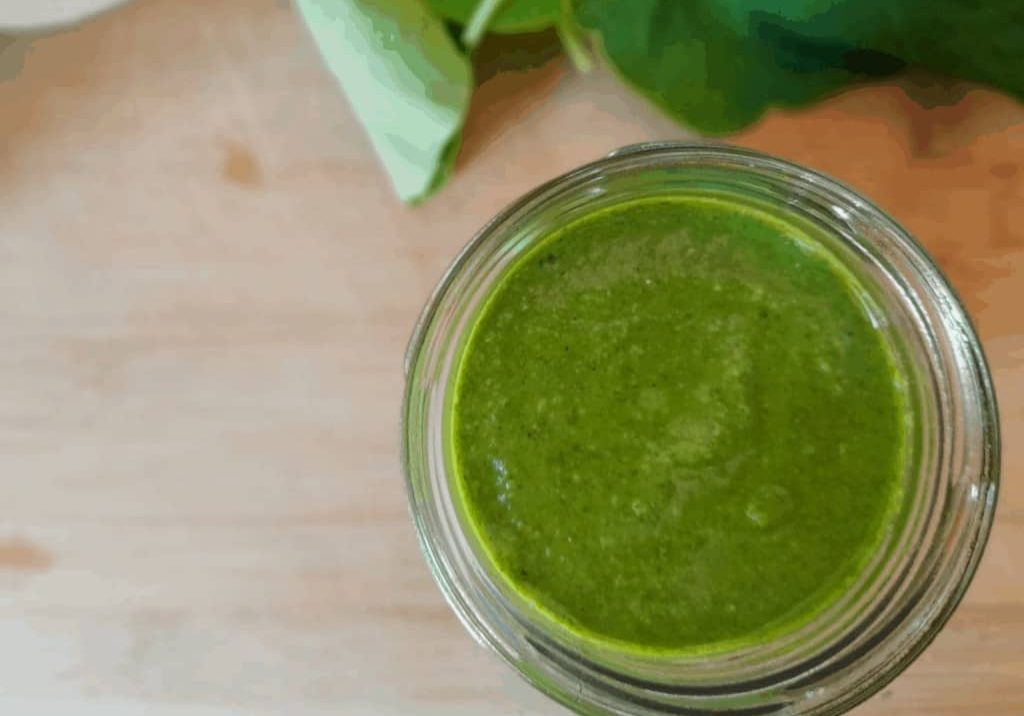
Who doesn’t love a good pesto?
To make a small batch of pesto, you need a lot of basil.
I had high hopes for my basil last season. I started Lettuce Leaf Basil, Dark Opal Basil, Sweet Basil and Thai Basil seeds.
The seeds germinated and I got seedlings. But how many plants grew?
None.
Not one.
I excitedly planted the seedlings. Crossed my fingers and dreamed of delicious pesto.
Then it rained and rained and rained.
And then the slugs decided the “all-you-can-eat basil buffet” was irresistible.
So, no basil.
I was disappointed. Unfortunately, that was the theme in the garden over the summer. Many summer crops failed due to low temps and high rainfall, and slugs. Thousands of slugs.
That’s ok. That’s gardening.
What did grow well were the nasturtiums.
At one point, they were taking over the garden. Clearly, I need to show some restraint when shoving seeds randomly in garden beds.
But what I learnt was not only do nasturtiums look beautiful, the entire plant is edible.
I have been using the flowers in salads and teas, I have pickled a jar of nasturtium seeds (spoiler alert, I hated them), and the leaves have been going into salads, wraps and stir-fries.
And then I discovered the Garden Pesto recipe in the River Cottage Handbook No. 2 – Preserves we had been given one Christmas.
Oh my!
This pesto has quickly become a favourite of ours.
We have used the pesto on zoodles (spiralized zucchini), pasta, as a dip, dolloped in wraps, on roast vegetables, in mashed vegetables and more. I also made a delicious pesto mayonnaise. So, good!
I have made many batches, using up the leaves and seeds when I pulled out the ever-growing, wild plants and I have enough pesto in the freezer to last us until next summer.

This is one of those easy, flexible and delicious recipes that quickly becomes a staple. I hope you love it as much as we do.
If you have never grown Nasturtiums I encourage you to do so. Just be careful where you plant it, it can quickly take over and drop seeds everywhere. But they are easy to pull out. They also grow well in pots.
In this recipe, I have included ingredients I like to use. The original recipe calls for mint to be included as an option. I have never done this but I imagine it would be a tasty addition.
Tips
The recipe is forgivable, and I certainly am not strict when following it.
On occasion, I have added wild rocket into the mix, and instead of garlic, I use garlic chives which have a milder garlic flavour.

For the cheese component of the recipe, I have used Parmesan, Cheddar and Pecorino and even tried a vegan version using Nutritional yeast in place of the cheese. All were equally delicious.

I love pine nuts but find them too expensive to buy all the time, so most of my batches of pesto include walnuts which work beautifully. Hazelnuts would be interesting to try.

I encourage you to experiment and find the flavours you like.
I use a Nutri Bullet or Vitamix to make the pesto, but any food processor or blender will do. Or you can do it the good ole fashioned way using a mortar and pestle.
I hope you try making this pesto and find the flavours you enjoy.

Easy Garden Pesto
Ingredients
Method
- Wash jars – sterilise if you feel the need
- Wash as Nasturtium leaves and dry well
- Grate Parmesan Cheese
- Add all ingredients, except salt, to blender and blend until well combined and smooth
- Add salt to taste
- Spoon pesto into prepared jars and pour oil over the top to seal the pesto and exclude air
- Keep in the fridge and use within 4 weeks
- Each time you use the pesto, pour a little more oil again to seal
Notes
- Nasturtiums can get a little wild in the garden so it is easy to cut them back and harvest the leaves and flowers (for tea) at the same time.
- To be more efficient, I make a lot of pesto at once and freeze the excess in Ziploc bags.